

Divorce in New Jersey without a lawyer is possible when spouses agree on major issues. However, the process still involves legal paperwork, deadlines, and court procedures.
Many people choose self-representation to reduce legal expenses. Before filing alone, you should understand the risks, filing requirements, and situations that may require legal guidance.
While filing independently may seem straightforward, divorce decisions can affect your finances and family for years. Property division, custody arrangements, and support agreements should be reviewed carefully before submitting paperwork.
Can You Represent Yourself in a New Jersey Divorce?
Yes. Spouses can handle their own divorce cases. This is commonly called a pro se divorce in New Jersey.
You remain responsible for:
- Completing all required paperwork
- Filing documents correctly
- Serving your spouse properly
- Following court deadlines
- Attending required hearings
Self-represented spouses are held to the same legal standards as attorneys during court proceedings.
Judges expect all documents to be completed accurately and submitted on time. Missing information or procedural errors may lead to rejected filings, additional court appearances, or delays in finalizing the divorce.
When Does Filing Without a Lawyer Work Best?
A self-file divorce in NJ is best suited to uncontested divorces. This means both spouses agree on:
- Property division
- Child custody
- Child support
- Alimony
- Debt allocation
An uncontested divorce is usually faster and less stressful. However, disagreements can quickly complicate the process.
Couples with significant assets or custody disputes often benefit from legal representation, which can provide peace of mind and clarity during complicated issues.
Steps in the DIY Divorce Process
The DIY divorce process typically includes several stages.
1. Prepare the Divorce Complaint
You must file a Complaint for Divorce with the court. This document explains the grounds for divorce and the requested relief.
2. File Required Documents
The court requires several NJ divorce forms and self-filing documents. These may include:
- Confidential litigant forms
- Financial disclosures
- Case information statements
- Certification documents
Reviewing documents needed for divorce can help you prepare properly.
3. Serve Your Spouse
Your spouse must receive copies of the filed paperwork through approved service methods.
4. Attend Court Hearings
Some uncontested cases require minimal court appearances. Contested divorces may involve multiple hearings.
How to File Divorce Papers Without an Attorney
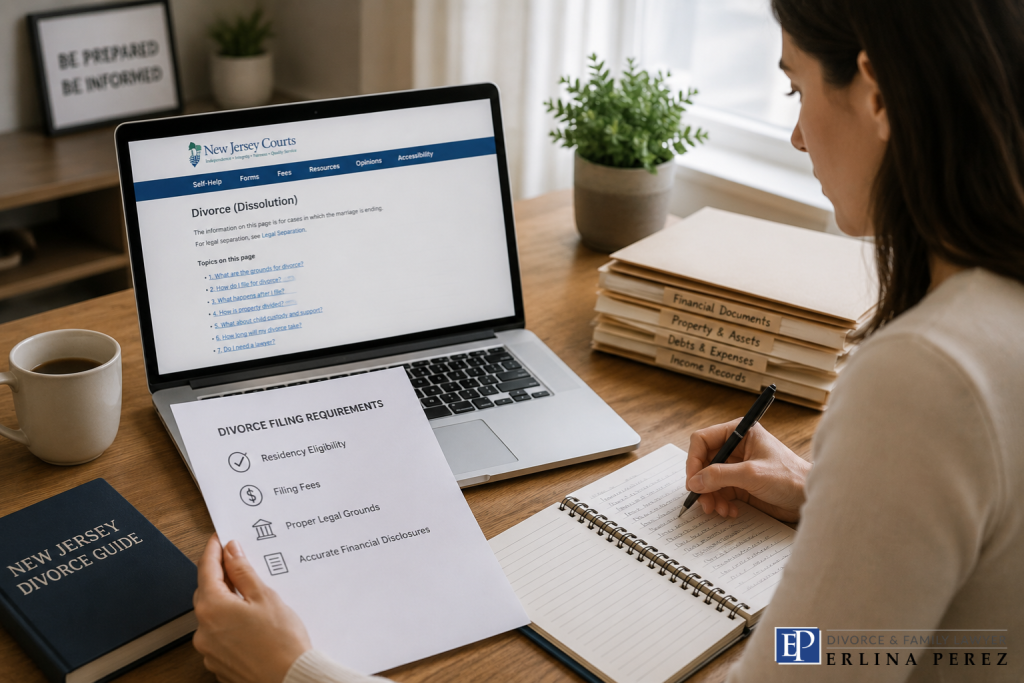
Many people search online for how to file divorce papers in NJ without an attorney. While online resources may explain general procedures, every divorce involves unique legal issues.
The New Jersey Courts divorce resource provides official filing information for self-represented individuals.
You should also understand all NJ court divorce filing requirements, including residency, fees, grounds, and financial disclosures, to prevent delays and ensure a smooth process.
These requirements include:
- Residency eligibility
- Filing fees
- Proper legal grounds
- Accurate financial disclosures
Failure to meet these requirements can delay your case.
Risks of Filing Without a Lawyer
The biggest concern is the risk of filing for divorce without legal representation. Many people overlook important financial or parenting issues during negotiations. Common problems include:
- Unequal property division
- Hidden assets
- Incorrect child support calculations
- Unclear custody agreements
- Tax-related consequences
Mistakes made during divorce settlements are often difficult to reverse later. Reviewing New Jersey divorce laws may help you better understand your rights.
Should You Use an Online Divorce Service?
Some couples choose an online divorce platform in New Jersey to prepare documents.
These services may help with basic uncontested divorces. However, they cannot provide personalized legal advice.
Online platforms also cannot represent you during disputes involving:
- Child custody
- Spousal support
- Retirement accounts
- Complex property division
Even in simple cases, legal review may help prevent costly mistakes.
Legal Separation vs Divorce in NJ
Many spouses ask about the differences between legal separation and divorce in NJ. New Jersey does not formally recognize legal separation like some states. Instead, couples may create separation agreements while remaining legally married.
Divorce legally ends the marriage and resolves financial and parenting issues permanently. Understanding the difference helps you choose the best path for your situation.
Protect Your Rights Before Filing Alone
Filing for divorce independently may work for some couples, but every case deserves careful evaluation. The right legal guidance can help protect your finances, parenting rights, and long-term stability.
Divorce & Family Lawyer Erlina Perez assists individuals throughout Bergen County with compassionate family law representation. Call (201) 880-7070 or visit the contact page to discuss your options.
Before moving forward with a divorce in New Jersey without a lawyer, make sure you fully understand your legal rights and responsibilities.